
The Loneliest Season: Why Festival Leaders Need to Talk About Holiday Grief
It's 2am on December 23rd, and you're alone.
Not alone because you chose to be. Alone because your team went home to families three states away. Alone because the venue is dark and everyone else is wrapping presents. Alone because the adrenaline crash from your last event left you feeling emptied out just as the world demands you be full of holiday cheer.
I know this loneliness. In 36 years of producing the New Orleans Jazz & Heritage Festival, I've felt it. Memorial Day, the 4th of July, December holidays… That specific ache when Instagram fills with family gatherings while you're running production schedules. That grief when you realize you've spent another holiday season giving everything to create joy for hundreds of thousands of people—and you're too exhausted to feel it yourself.
Here's what I've learned: You're not broken. The industry is.
The Numbers Don't Lie—And Neither Should We
The research I recently compiled paints a picture I wish I could say surprised me. Entertainment workers are three times more likely to experience depression than the general population. Seventy-four percent of live events professionals report poor mental health due to their work. During the holidays? Sixty-six percent of people report feeling lonely—but for those of us in this industry, working while everyone else celebrates, those numbers skew much higher.
We create connection for a living. We engineer moments of collective joy. We are experts at bringing people together.
And we are profoundly, structurally isolated.
Here's the part that breaks my heart: Only 27% of live events workers know where to access industry-specific mental health support. We're suffering in silence, believing that admitting struggle means we're not cut out for this work we love.
That's a lie. And it's time we called it what it is.
The Mental Health Crisis in Live Events
Entertainment workers' depression rate vs. general population
Live events professionals reporting poor mental health
People feeling lonely during holidays
Workers who know where to find industry-specific support
The Holiday Season Amplifies What's Already There
The mental health crisis in our industry doesn't start on December 1st. It's baked into irregular schedules, impossible hours during peak season, physical exhaustion that becomes chronic, and a culture that equates boundaries with weakness.
But the holidays? They turn up the volume on all of it.
Sixty-one percent of Americans expect to experience loneliness during the holiday season. For Gen Z workers—who make up a significant portion of our festival crews—that number jumps to 75%. Add in working Thanksgiving, Christmas, or New Year's Eve while your family gathers without you, and the isolation becomes acute.

Then there's what I call the December crash. After months of high-stakes production, intense collaboration, and adrenaline-fueled problem-solving, many of us experience post-event depression right as the world expects us to be celebrating. The research calls it "dopamine and endorphin withdrawal." I call it feeling completely untethered.
The structure vanishes. The purpose evaporates.
The team you bonded with during crisis after crisis scatters. And you're left wondering: Who am I when I'm not producing?
Leadership Makes It Lonelier—Not Easier
If you're in leadership, you might think you should be immune to this. You might believe that your role requires you to hold it together while everyone else falls apart.
Let me tell you what the research says: 50% of CEOs report experiencing loneliness. Seventy percent of new leaders feel it. And in 2024, 55% of CEOs reported mental health issues—a 24-point increase from the year before.
Leadership doesn't insulate you from loneliness. It intensifies it.
You carry confidential information you can't share. You make decisions that affect people's livelihoods. You absorb your team's stress while projecting confidence you don't always feel. And during the holidays, when your own grief or loneliness surfaces, you're still expected to be the steady one.
I spent years believing that admitting struggle would erode confidence in my leadership. What I've learned—through my work as a Gallup-certified CliftonStrengths coach and as an ordained minister integrating spiritual formation with leadership development—is that the opposite is true.
Vulnerability isn't weakness. It's the foundation of authentic leadership.
What Actually Helps (And What Doesn't)
Here's what doesn't help: Pretending you're fine. Toxic positivity that denies the reality of grief. Messages that suggest you should "just be grateful" or "focus on the good."
Here's what does help:
Naming it. The simple act of acknowledging that the holiday season is hard for people in our industry creates permission for others to stop performing joy they don't feel.
Connecting it to something bigger than yourself. My Belief strength (my #1 in CliftonStrengths) tells me that work has meaning beyond the paycheck. When I anchor in that—when I remember that the loneliness I feel is in service of creating something that matters—it doesn't erase the pain, but it gives it context.
Accessing industry-specific support. Organizations like Backline (for music industry professionals), Behind the Scenes (for entertainment technology workers), and MusiCares (offering free Holiday Emotional Support Groups) exist because people in our industry have specific, documented needs that general mental health resources don't always address.
Building peer support before you need it. Research shows that employees with a "best friend" at work are seven times more likely to be engaged. Those relationships aren't just nice to have—they're protective factors against the isolation that can become dangerous.
Reaching out in crisis. The 988 Suicide & Crisis Lifeline (call or text 988) and Crisis Text Line (text HOME to 741741) operate 24/7. You don't have to be actively suicidal to use them. You just have to be struggling.
This Is Strategic, Not Soft
Some of you are reading this thinking: This is nice, but I have a festival to run.
I get it. I've been there. But here's what my Strategic strength knows: Ignoring the mental health crisis in our industry is not a viable long-term plan.
Forty-two percent of event professionals have changed jobs as a direct result of workplace stress. Forty-two percent of those with extremely negative mental wellbeing say they'll likely leave their career within five years.
We are bleeding talent. We are losing institutional knowledge. We are perpetuating a cycle that makes this work unsustainable for the very people who are best at it.
The research is clear: hope isn't soft. It's 'the catalyst for change and enabler of recovery' across all mental health outcomes. When leaders create environments where struggle can be acknowledged without shame, they're not being touchy-feely—they're implementing evidence-based retention strategies.
Addressing mental health—especially during the holidays when the pain is most acute—isn't soft. It's survival.
What I Want You to Know
If you're reading this at 2am, unable to sleep because the loneliness feels too big:
You are not alone in feeling alone.
Your struggle doesn't mean you're failing. It means you're human, doing profoundly demanding work in an industry that hasn't caught up to what it asks of you.
The grief you feel—for relationships strained by touring, for holidays missed, for the version of yourself who had energy for things outside of work—is real. And it deserves to be honored, not suppressed.
You don't have to have it all figured out. You don't have to be okay. You just have to be willing to stop pretending you are when you're not.

In my work with The Leadership House, I've built my coaching practice around a simple truth: Holistic leadership integrates who you are with what you do. Your personal foundation, your professional expression, and your transcendent connection aren't separate domains—they're interdependent.
When one suffers, they all suffer. When one heals, they all benefit.
Start Here
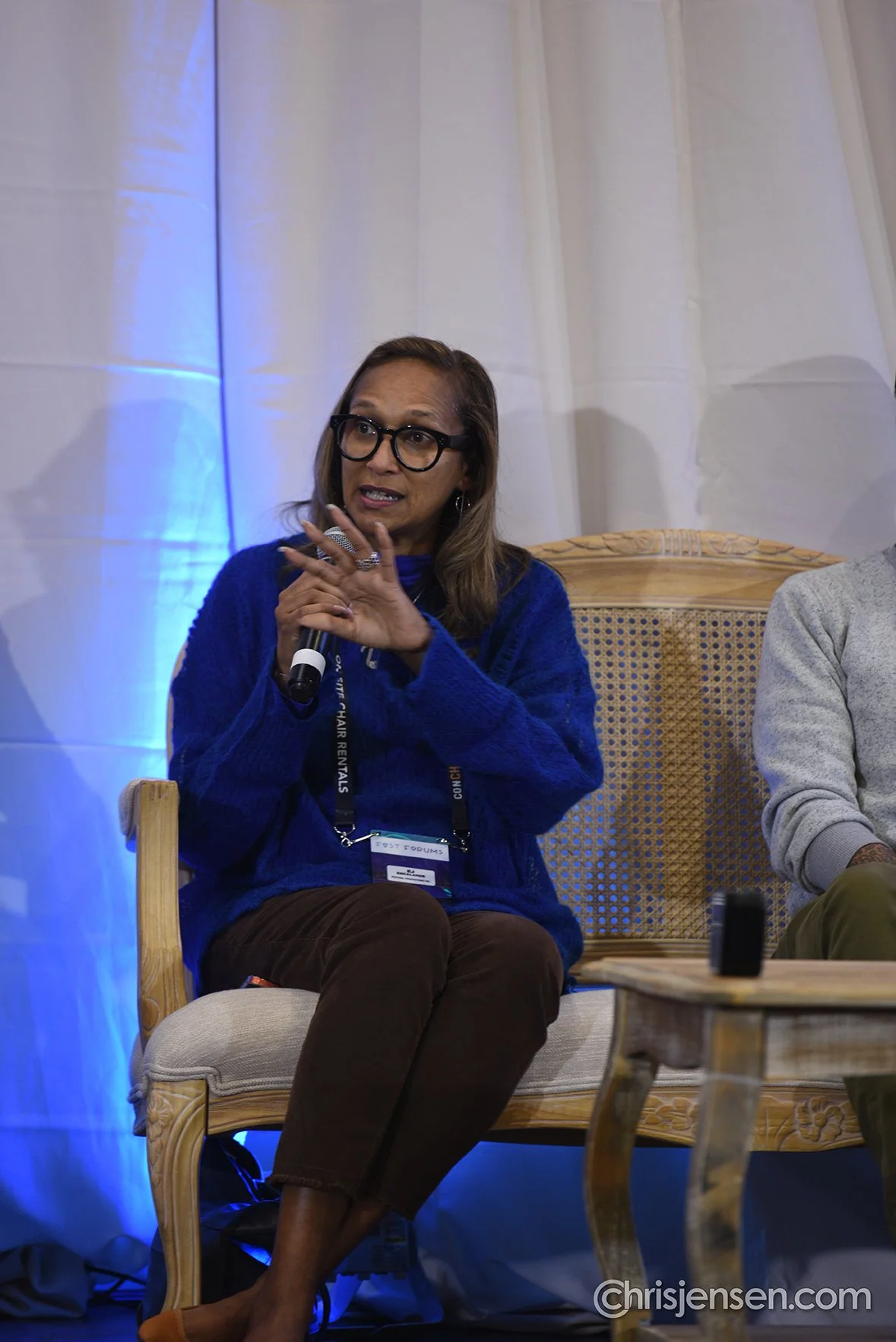
Photo by Chris Jensen
This holiday season, I'm asking you to do one brave thing: Tell the truth about how you're doing.
Having recently lost a young legend in the industry, let’s not turn our hearts away from the “Production Debt.”
To one person. In one text. In one moment of honesty instead of performance.
If you're in leadership and you need someone who understands both the spiritual formation work and the operational realities of festival production, I'm here. If you need clarity about whether this career still fits who you're becoming, let's talk. If you just need to know that someone gets it—I do.
Because after decades in this industry, producing one of the most beloved festivals in the world, teaching festival management, and building a coaching practice specifically for leaders in live events, I can tell you this:
The loneliness is real. The grief is valid. And you don't have to carry it alone.
Ready to stop carrying it alone?
Book a clarity call to explore 1:1 Festival & Live Events Leadership Coaching
Schedule 1:1 Creative Industry Leadership Coaching tailored to your unique challenges
Subscribe to my insights newsletter for research-backed leadership strategies for festival professionals
Email me or DM me on IG @iraisethestandard
Crisis Support (24/7):
988 Suicide & Crisis Lifeline: Call or text 988
Crisis Text Line: Text HOME to 741741
Backline (music industry): backline.care
MusiCares: musicares.org
Behind the Scenes (entertainment tech): behindthescenescharity.org