
Why Your Best Staff Won't Make It Through Peak Season (And What Tech Startups Know That You Don't)
Here's what I know you're facing right now: It's December. Peak production season starts in January. And you're looking at a team that's already running on fumes.
The numbers tell a story you're living: 79% of event professionals say their jobs are more stressful now than before the pandemic. Your hourly staff? 63% annual turnover. And here's the kicker—60% of our industry workforce is brand new since 2020. That means the institutional knowledge that used to carry you through crisis moments? Gone.
But here's what you might not know: The tech industry cracked this code years ago. Not because tech workers are built differently, but because they implemented something called sprint methodology—structured work cycles with mandatory recovery built in. And the results? Teams using this approach report 24% more responsiveness, 42% higher quality, and dramatically reduced burnout.
What if you could prevent your best people from burning out before festival weekend even arrives? What if there was a system—proven in industries just as intense as ours—that could help you lead your team through peak season and actually have them WANT to come back next year?
Let me show you what's possible when you stop managing by crisis and start leading with structure.
Let's be honest about where we are
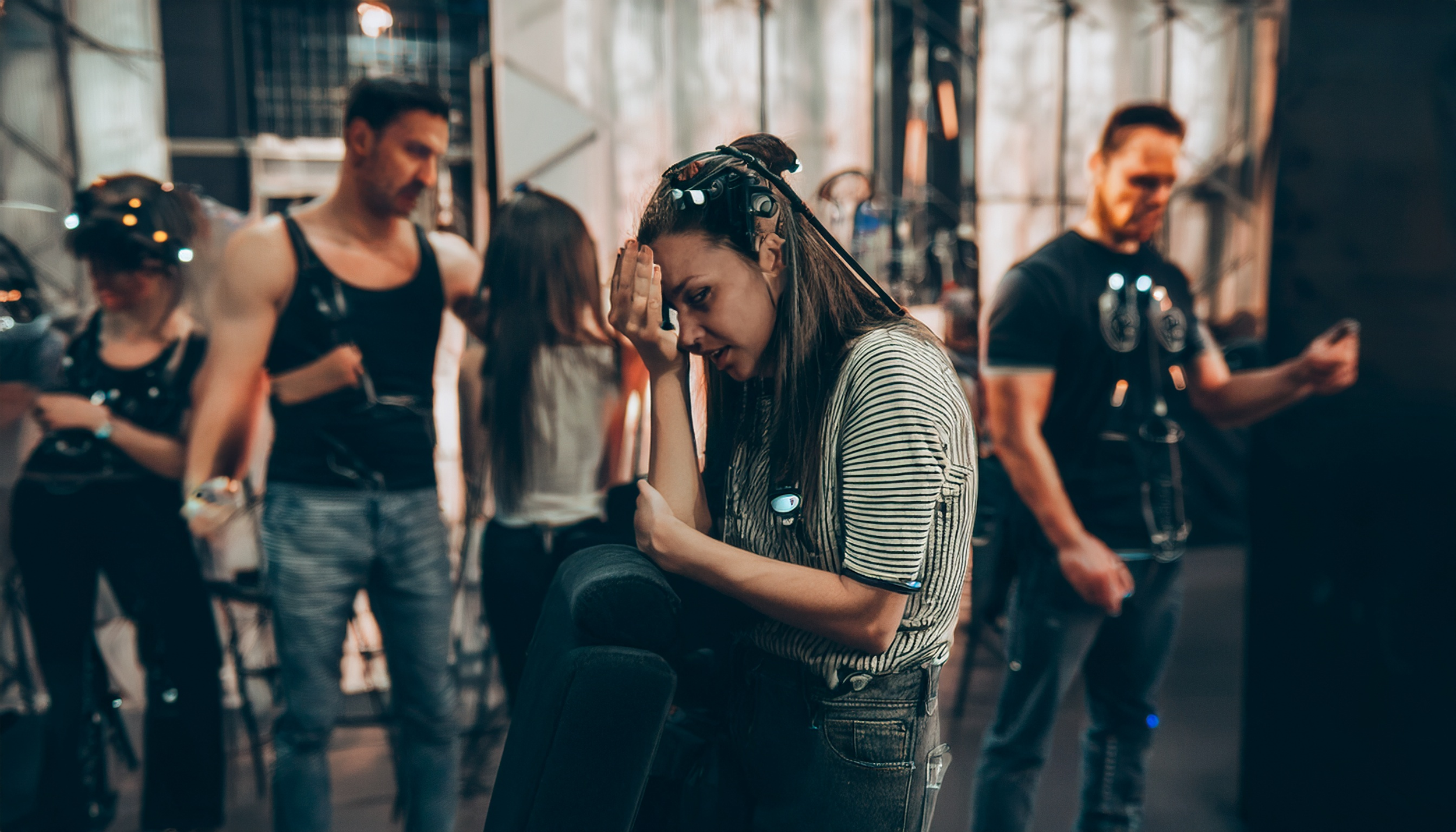
I've spent 36 years producing Jazz Fest, so I'm not going to sugarcoat this: We're in trouble. Event planning now ranks as the 3rd most stressful job globally—right up there with military service and emergency response (O*NET rates our stress tolerance requirements at 95 out of 100). One in three of us experiences poor mental health annually, and 42% have already quit a job specifically because of the stress.
But here's what really keeps me up at night: After COVID, 60% of our workforce is new. Paul Van Deventer at MPI reported that the average worker age dropped nearly 10 years. We lost a generation of institutional knowledge right when events got exponentially more complex.
The Event Industry Council's latest research confirms what you already feel: 89% of event professionals report that staffing shortages are directly impacting their events. Not "might impact someday"—impacting RIGHT NOW.
You remember Astroworld 2021? Ten people died. Three hundred injured. The investigation revealed security guards hired hours before gates opened, medical staff who couldn't perform basic first aid, and only two people authorized to stop the show. Was that event director a bad person? No. They were operating in a system designed to produce exactly that outcome: exhausted, undertrained, understaffed teams making life-and-death decisions under impossible conditions.
Fyre Festival tried to plan in 6-8 weeks what normally requires a year, with no experienced personnel. We all watched that disaster unfold. But how different is your timeline looking right now?
Here's the financial reality: Cornell research shows turnover costs average $9,932 per employee in hospitality. With 75.2% annual turnover—the highest of any industry—if you're running a festival with 50 production staff, even moderate turnover is costing you six figures before you account for lost knowledge and operational quality.
The question isn't whether we're in crisis. The question is: What are you going to do about it before January hits?

What tech figured out (that we haven't... yet)
Stay with me here, because I know "tech industry solutions" might sound ridiculous when you're trying to build out a festival site. But the tech world solved something we desperately need: How do you sustain high performance without burning people out?
Their answer? Sprint methodology. And before you roll your eyes, look at what happened when they implemented it.
Two-thirds of agile tech teams use 2-week sprints as their standard operating rhythm. Jeff Sutherland, who co-created the Scrum framework, tracked teams improving productivity by 300-400%. Not 30%. THREE TO FOUR HUNDRED PERCENT.
Spotify's engineering teams saw their average work completion time drop from 8.1 days to 3.9 days—basically cutting delivery time in half—while they TRIPLED monthly active users. Without adding more engineers. McKinsey studied organizations using these methods and found 93% reported better customer satisfaction and operational performance, while 76% said employee engagement improved.
So what's the actual structure that creates these results?
Every 2-week sprint includes:
Sprint planning (2-4 hours at the start): Your team decides what they can realistically accomplish in the next two weeks
Daily standups (15 minutes): Quick check-ins to surface problems before they become disasters
Sprint review: Show stakeholders what got done
Sprint retrospective: The team reflects on what worked, what didn't, and what to change
That last part—the retrospective—is where the magic happens. Research from CA Technologies found teams with regular retrospectives show 24% more responsiveness and 42% higher quality with less chaos than teams that skip this step.
The retrospective isn't about blame. It's about learning. Teams use simple frameworks like Start/Stop/Continue (What should we start doing? Stop doing? Keep doing?) or the Sailboat method (wind = what's propelling us forward, anchors = what's holding us back, rocks = obstacles ahead). Teams using the Sailboat method resolve issues 23% faster and improve their ability to predict timelines by 35%.
Think about your last post-festival debrief. Was it actually a learning session, or was it 90 minutes of figuring out whose fault everything was?

The secret weapon: Mandatory recovery time
Here's where tech gets really interesting for us: They build in something called cooldown periods. And no, this isn't "we'll catch up on sleep after the festival." This is structured, mandatory, protected recovery time.
Basecamp alternates 6-week work cycles with 2-week cooldown periods where teams work on whatever they choose—fixing annoying problems, exploring new ideas, or just recovering. The New York Times engineering teams do the same thing: 2-week cooldowns every 6 weeks.
The critical rule: Cooldown is NOT a safety net for unfinished work. It's genuine recovery time. Google's famous 20% time (where employees could work on personal projects) gave us AdSense and Gmail. Spotify allows 10% "hack days" for experimentation.
These aren't productivity losses. They're investments in sustained performance and the kind of creative problem-solving that prevents next year's disasters.
Now let me tell you about something called blameless post-mortems—because this might be the most important concept in this entire article.
Google's Site Reliability Engineering team established this philosophy: "A blamelessly written postmortem assumes that everyone involved in an incident had good intentions and did the right thing with the information they had." The focus shifts from "who screwed up" to "what system conditions enabled this failure."
Google's Project Aristotle—their massive internal research on team performance—found that psychological safety (the belief you won't be punished for speaking up about mistakes) is the #1 factor in high-performing teams. Not intelligence. Not experience. Not resources. SAFETY.
Etsy pioneered "just culture" where engineers give detailed accounts of their contributions to failures without fear of punishment. Their engineering philosophy: "If we are not learning from our mistakes, we are taking the cost of the mistake, but without the benefit of learning from it."
For those of us running festivals, this means transforming your post-event debrief from a blame game into a genuine learning opportunity. The military's After-Action Review structure gives us a proven framework:
What was supposed to happen?
What actually happened?
Why was there a difference?
What can we do to improve?
Meta-analysis shows teams using After-Action Reviews have higher performance, team efficacy, openness of communication, and cohesion than teams that don't. The key success factor? Psychological safety where everyone present is treated as equals, regardless of their title.

What healthcare and aviation learned about mandatory rest (and why it matters for your festival)
You know what healthcare and aviation have that we don't? Mandatory rest requirements written into law. And the research behind those laws applies directly to festival production intensity.
Medical residents are limited to 80 hours weekly (averaged over 4 weeks), no shifts exceeding 24 hours, and minimum 10 hours off between duty periods. Why? Because research showed a 10% improvement in patient mortality after implementing these rules, plus measurable reduction in emotional exhaustion.
The FAA mandates minimum 10-hour rest periods including 8 hours of uninterrupted sleep, with duty period limits that vary by time of day—because humans can sustain intensity longer during day shifts than night shifts. The philosophy behind Part 117 regulations: "No single element of the rule mitigates the risk of fatigue to an acceptable level; rather, we've adopted a systems approach whereby both the carrier and the pilot accept responsibility for mitigating fatigue."
Now here's the neuroscience that should scare you: Chronic burnout physically changes your brain. Your prefrontal cortex (the part that makes good decisions) shrinks. Your amygdala (fear and anxiety center) enlarges. Your hippocampus (memory) deteriorates under prolonged cortisol exposure.
But here's the good news: Research shows that after 4 weeks of recovery, brain activity patterns return to baseline. Neurological recovery IS possible with adequate rest.
Christina Maslach, who's spent decades researching burnout, identified six workplace factors that predict whether people burn out: workload, control, reward, community, fairness, and values. The greater the mismatch between person and job on these dimensions, the greater the burnout risk.
For festivals, this means examining not just hours worked but whether your staff have autonomy, feel recognized, experience equitable treatment, and see their values reflected in how you make decisions.

How to actually implement this in festival production
Okay, so how do you take tech sprints, mandatory cooldowns, and blameless post-mortems and make them work in festival production? Let me break it down into phases you can implement starting NOW.
Pre-Production Sprint Structure (January-May)
Map your pre-production timeline as successive 2-week sprints, each with specific deliverables:
Example Sprint Schedule:
Week 1-2: Venue/permits sprint → retrospective meeting
Week 3-4: Artist booking sprint → retrospective meeting
Week 5-6: Operations planning sprint → retrospective meeting
Week 7: Cooldown/recovery week (catch up on life, fix nagging problems, rest)
Week 8-9: Logistics sprint → retrospective
Week 10-11: Marketing push sprint → retrospective
And so on...
Each sprint ends with a 2-hour retrospective where the team answers:
What worked really well?
What should we stop doing?
What's one thing we'll change for the next sprint?
During Event (Multi-Day Festivals)
This is where you adopt aviation's approach:
Daily check-ins: 15-minute standup reviewing last 24 hours and anticipating next 24
Fitness-for-duty self-declaration at shift start (if you can't honestly say you're safe to work, you don't work)
Cumulative hour tracking—not just daily limits but total hours over the event
Minimum 10-hour rest enforcement between shifts (non-negotiable)
Tiered rest requirements by role intensity: Your production leads need different recovery than general staff
Post-Event Recovery Protocol
This is where most of us fail. We finish the festival Sunday night and expect everyone back in the office Tuesday. Here's what actually works:
Day 1-2 post-event: Structured After-Action Review using 4Ls method (Liked, Learned, Lacked, Longed For) or Sailboat framework
Week 1: Documentation and knowledge capture—write down what you learned while it's fresh
Week 2-3: MANDATORY time off for core production team (not optional)
Week 4: Gradual return with reduced intensity
Before next production cycle: Individual check-ins to assess readiness
Gallup research shows employees who believe their employer cares about their wellbeing are 3x more engaged and 71% less likely to report burnout. Companies with high engagement enjoy 59% lower turnover and 21% higher profitability.
The investment in structured recovery and psychological safety pays measurable returns. This isn't soft skills—this is operational strategy.
The competitive advantage you can't afford to ignore
Look, I get it. You're reading this thinking, "This sounds great, but I barely have time to plan the festival itself, much less restructure how my entire team operates."
But here's what I know after 36 years: The festival industry's burnout crisis isn't inevitable. It's a system design problem with proven solutions from adjacent industries.
Tech's sprint methodology delivers predictable intensity cycles that prevent accumulated fatigue. Healthcare and aviation's mandatory rest regulations prove that structured recovery improves both performance and safety. Military After-Action Reviews and tech blameless post-mortems show how to extract learning from failures without destroying the psychological safety that enables honest communication.
And here's the strategic reality you can't ignore: With 60% of our workforce being industry newcomers and 89% of event professionals reporting staffing shortages directly impacting their events, the organizations that retain experienced staff through sustainable practices will have a decisive operational advantage.
You're not competing on who can push people harder. You're competing on who can build systems that enable sustained excellence.
The research is absolutely clear on this: Sustainable pace isn't the opposite of high performance—it's the foundation of it.
Your action step before January hits
Here's the sprint retrospective question I want you to ask yourself—and your leadership team—before peak production season starts:
What will you START doing, STOP doing, and CONTINUE doing to ensure your team survives peak season intact?
Write it down. Schedule the retrospectives into your production calendar right now. Block out that post-festival recovery week before someone schedules meetings in it. Pick one blameless post-mortem framework to try after your next major milestone.
You don't have to overhaul everything at once. That's not how sprints work. You pick one thing to improve every two weeks. By May, you'll have implemented 8-10 improvements without the chaos of a total system redesign.
The festival leaders who figure this out in 2025 will be the ones whose teams actually want to come back in 2026. The ones who don't... well, you've seen those LinkedIn posts. "Seeking experienced festival production manager. Must be willing to work 80-hour weeks. Benefits TBD."
Your experienced staff are watching to see which kind of leader you're going to be.
Quick Reference: Key Statistics
79% of event professionals report more job stress than pre-pandemic (StaffConnect 2023)
60% of industry workforce entered since pandemic (MPI 2024)
63% annual turnover for hourly event staff (HR Dive 2024)
89% of events impacted by staffing shortages (Event Industry Council 2025)
300-400% productivity improvement with sprint methodology (Sutherland/Scrum)
24% more responsive, 42% higher quality with retrospectives (CA Technologies)
$9,932 average turnover cost per employee in hospitality (Cornell)
75.2% annual turnover rate in hospitality—highest of any industry
10% improvement in patient mortality with mandatory rest limits (healthcare research)
4 weeks for brain activity to return to baseline after burnout (neuroscience)
59% lower turnover with high employee engagement (Gallup)
21% higher profitability with high employee engagement (Gallup)
Frameworks to Try This Week
Start/Stop/Continue Retrospective (15 minutes with your team)
START: What should we begin doing?
STOP: What should we cease doing?
CONTINUE: What's working that we should maintain?
4Ls Retrospective Framework (Post-sprint or post-milestone)
LIKED: What went well?
LEARNED: What did we discover?
LACKED: What was missing?
LONGED FOR: What do we wish we had?
Sailboat Method (Visual retrospective)
WIND: What's propelling us forward?
ANCHORS: What's holding us back?
ROCKS: What obstacles are ahead?
ISLAND: Where are we trying to go?
Military After-Action Review (Post-event debrief)
What was supposed to happen?
What actually happened?
Why was there a difference?
What will we do differently next time?
Maslach Burnout Prevention Audit (Check your systems)
Workload: Are demands matched to capacity?
Control: Do staff have autonomy in how they work?
Reward: Is recognition sufficient and meaningful?
Community: Are workplace relationships healthy?
Fairness: Are decisions perceived as equitable?
Values: Do organizational and personal values align?
Here's What Happens Next
You've just read 2,800 words about how to prevent the staff burnout that's destroying festivals across our industry. You've seen the research. You've got the frameworks. You understand why this matters.
Now you have a choice.
Option 1: Bookmark this article, tell yourself you'll implement it later, and watch January arrive with the same chaos, the same exhausted team, the same turnover you've been dealing with for years.
Option 2: Actually do something different this time.
Three Ways to Take Action Right Now
1. Download the Free Sprint Retrospective Toolkit
Get all four retrospective frameworks (Start/Stop/Continue, 4Ls, Sailboat Method, Military AAR) formatted and ready to use with your team. Start implementing this week, before peak season hits.
2. Work With Me 1:1 to Adapt This to YOUR Festival
As a Gallup-Certified CliftonStrengths Coach with 36 years producing one of the world's most complex festivals, I help festival directors build sustainable operations that don't sacrifice your team (or yourself).
We'll start with YOUR unique leadership strengths—not some generic corporate leadership model—and build frameworks that actually work in YOUR specific operational reality. When your stage collapses or your headliner cancels, these systems hold.
What 1:1 Coaching Includes:
CliftonStrengths assessment and debrief
Customized sprint planning adapted to your festival timeline
Recovery protocols that fit your production cycle
Blameless post-mortem frameworks your team will actually use
Ongoing support through your peak season
Schedule Your Free 30-Minute Clarity Call - Let's talk about your specific situation and whether coaching is the right fit. No pressure, just strategy.
3. Join the Waitlist for Rising Festival Leaders Strengths Workshop
This is the 3-hour intensive I created for my Jazz Fest production team—combining CliftonStrengths with holistic leadership principles specifically for festival operations. We're bringing it to three cities in 2026 with limited seats per location.
Reply to this email with "WAITLIST" and you'll be first to hear about dates and cities.
The Reality You're Facing
The festival leaders who figure out sustainable operations in 2026 will be the ones whose teams actually want to come back in 2027. The ones who don't... well, you've seen those LinkedIn posts. "Seeking experienced festival production manager. Must be willing to work 80-hour weeks. Benefits TBD."
Your experienced staff are watching to see which kind of leader you're going to be.
The research is clear: Sustainable pace isn't the opposite of high performance—it's the foundation of it.
You don't have to figure this out alone. Let's build something better than perpetual crisis mode.
Start Here: Schedule Your Clarity Call
With strategic optimism and hard-won clarity,
EJ
p.s. Want to dive deeper into holistic leadership for festival and live event production? Learn more about The Leadership House and join festival and live event leaders who are building sustainable, high-performing teams.