
Festivals Aren’t Going Anywhere. Here’s the 44-Year-Old Reason Why.
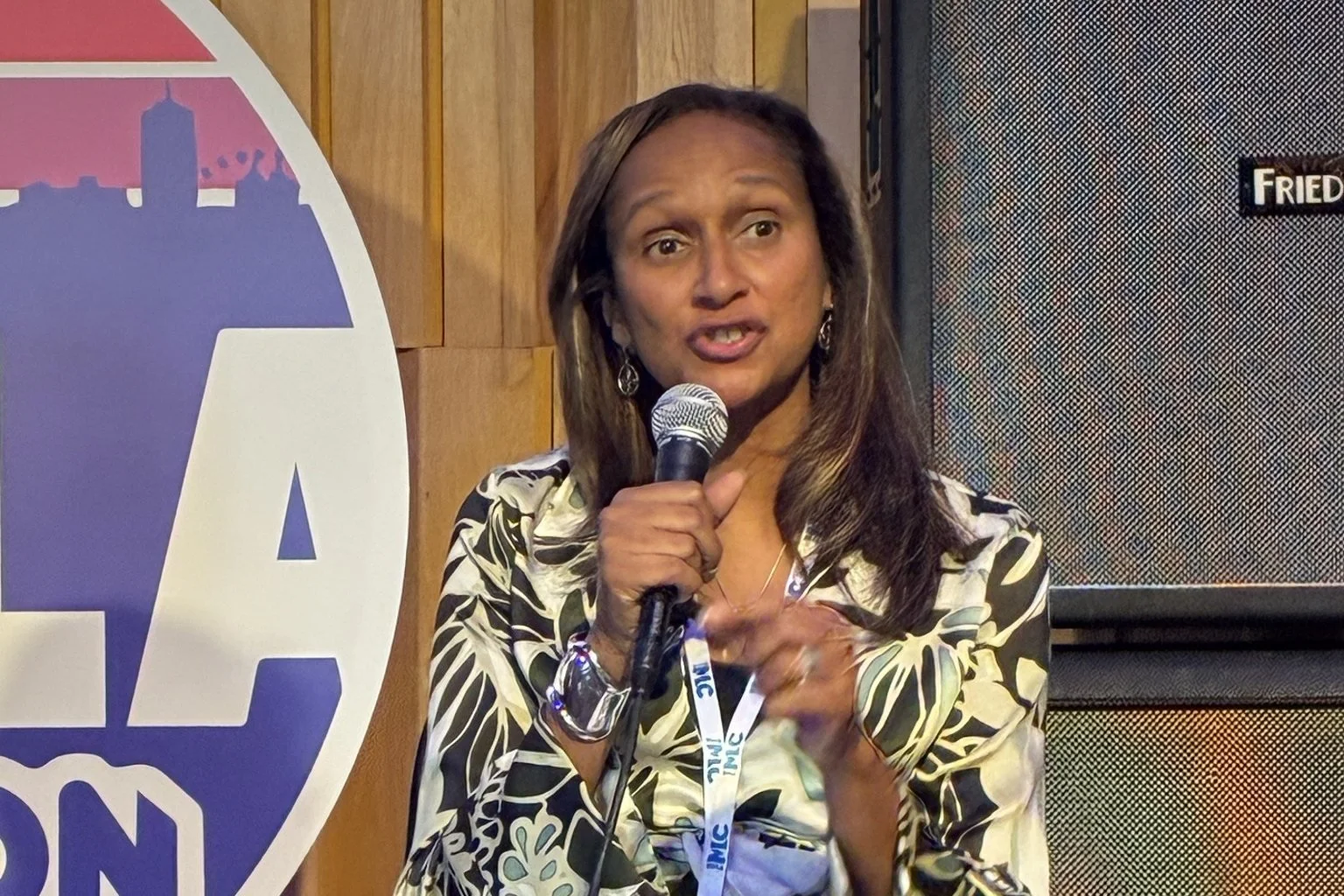
NOLA MusiCon 2026, George & Joyce Wein Center. The day I told a room full of producers: don't be afraid.
Festival Leadership · Industry Outlook · Deep Agility
⏱ Reading time: 8 min.
It's 5 a.m. The insurance renewal just landed in your inbox, and the number went up again.
By 2 a.m. the next night, you've run the math three ways. Fuel is up. Freight is up. The staging quote came back higher than last year's. And somewhere under all of it sits the question nobody says out loud in the budget meeting:
Will people still come?
In October, I sat on a panel at NOLA MusiCon in the Wein Center in Tremé, and we didn't sugarcoat any of it. Emergency contingencies. Insurance premiums. The real cost of putting on a show right now.
And then I ended on a high note, with what I really came to say: Don't be afraid. Festivals and live events aren't going away.
Not now. Not ever.
Not because I'm an optimist. Because the reason people come to festivals has been studied for more than 40 years, and it hasn't changed.
A 44-Year-Old Answer to Today's Question
In 1982, a recreation researcher at the University of Maryland named Seppo Iso-Ahola published a simple idea about why people travel and gather. It's called the seeking-escaping theory, and festival researchers have been building on it ever since.
Here's the whole thing in two words.
We escape. And we seek.
We leave something behind, and we go toward something we want. Both at once. Every time.
Seppo Iso-Ahola's seeking-escaping theory first appeared in Annals of Tourism Research in 1982. Four decades later, it's still one of the frameworks festival researchers use most to explain why people show up.
And he went one layer deeper. Each of those pulls has a personal side and a people side. So you get four reasons someone buys a ticket:
1. Personal escape
Getting away from my own stress. The deadline, the commute, the bills, the to-do list that never ends. For three days, none of it gets a vote.
2. Interpersonal escape
Getting away from the people I deal with every day. The boss. The group text. The same faces in the same rooms. Not because they're bad, but because everybody needs a break from their routine.
3. Personal seeking
Going toward something that fills me back up. Rest. Discovery. A new artist. The feeling of being fully alive in front of a stage with the sun going down.
4. Interpersonal seeking
Going toward my people. The friends I only see at this festival every year. The stranger next to me who knows every word of the same song. The family tradition that started with my grandmother.
Look at that list again. Which one of those is going away?
None of them.
"People will always want to get away and leave the craziness of life behind. And find something real together. That's what we build."
What Happened When Researchers Took It to Festivals
In 1997, researchers John Crompton and S.L. McKay took the theory to Fiesta in San Antonio and asked attendees why they came. What they found lined up with seeking and escaping: cultural exploration, novelty, recovering your balance, time with the people you came with, and meeting people you didn't know yet.
Since then, study after study has found the same handful of reasons at festival after festival. A county corn festival in South Carolina. A jazz festival in Umbria, Italy. Wine festivals, arts festivals, rock festivals. Escape. Socializing. Family togetherness. Novelty. Over and over again.
A study of a community festival in the rural Midwest identified six reasons people attended: escape, novelty, nostalgia and patriotism, event excitement, family togetherness and socializing. Escape was the strongest of them all.
So when the costs spike, remember who's on the other side of the box office window. The need for what we build isn't shrinking. If anything, the craziness of life is giving people more to escape from.
The Costs Will Zig-Zag. That's Uncertainty, Not the End.
Now, let's be honest about the other side of the ledger.
The insurance premium. The fuel surcharge. The freight. The staging. The security plan. The weather plan for the weather plan. The artist fees. The permit that took twice as long. The vendor who doubled their rate. The overtime when the storm rolled in during load-in. I could go on and on.
Those numbers will zig and zag. They always have. They will next season too.
That's not a sign the business is dying. That's uncertainty. And uncertainty is the life we chose when we said yes to this work.
I've been in this industry almost four decades. I haven't figured out every budget. But I'm not afraid to strip a model down to the studs and build something new.
I've done it more times than I can count.
We stripped down a cash system and rebuilt it cashless.
We took a production schedule that lived on pen, paper and an Excel file, and turned it into one shared Google Sheet. Assets and schedule together, with links, files, forms and resources the whole team can actually use.
We traded long, crowded meetings for smaller, focused check-ins with just the people who need to be in the room.
And I could go on.
None of those changes felt small at the time. Every one of them meant letting go of "the way we've always done it." And every one of them made the work better.
What This Means for the Way You Lead
So what do you actually do with a 44-year-old theory when the renewal is sitting in your inbox?
Here's what I told the room.
Go back to your backyard
Before you cut, add or rebuild anything, ask your community. What are they trying to get away from right now? What are they looking for? What would they show up for? You can't design for escape and seeking if you've stopped listening to the people doing the escaping and seeking.
Design for all four reasons
Most of us build for one. The lineup is personal seeking. But where's the shade and quiet for personal escape? Where's the reunion spot for the friends who come every year? Where does the stranger turn into a friend? When the budget shrinks, protect the pieces that serve all four.
Be fearless across generations
Your 24-year-old coordinator and your 60-year-old patron are escaping different things and seeking different things. Ask both. The best new ideas usually come from the person who just walked in, and the best warnings usually come from the person who's seen it fail before.
If you want to go deeper on building a team that isn't afraid to try something new, I'm reading Building a Fearless Organization by Amy Edmondson and Michaela Kerrissey right now. It's a hands-on fieldbook, not theory.
Let it pause, then restart
Sometimes an event needs to take a season off. So do people. A pause isn't a failure. It's how you get your strength back. Shift. Then restart.
And that goes for you too. Maybe you're a festival director, a producer, an artist manager, a venue executive, a sponsor rep. Maybe you're producing your very first festival and wondering if you picked the wrong industry at the wrong time. You didn't. People will need what you're building.
Escape & Seek Audit -- Before You Plan Next Season
- What is your audience trying to escape from this year? Have you asked them, or are you guessing?
- What are they seeking that they can't get anywhere else? Is it still at the center of your event?
- Which of the four reasons does your festival serve best? Which one have you quietly stopped serving?
- When costs force cuts, which line items protect the experience, and which ones just protect last year's model?
- Who on your team is under 30, and who is over 60? Have you asked both what they think people want next?
Why I Left That Room Hopeful
We spent most of that hour on the hard stuff. Contingencies. Premiums. Fuel. And I still walked out of the Wein Center more hopeful than I walked in.
Because the room was full of people who'd chosen this work knowing exactly how hard it is. And because a researcher told us more than 40 years ago what we see every season when the wristbands go on.
People escape. People seek. And they come to us to do both.
The costs will zig and zag. We'll still be here.
Before you rebuild your next season, rebuild your own footing first. I wrote three questions for exactly that moment, the ones every live events leader should ask before burnout answers for them.
Free Guide · The Leadership House
3 Questions Every Live Events Leader Should Ask Before Burnout Answers For Them
Ten minutes to read. Best read after load-out. Sent straight to your inbox, plus my monthly After the Load Out newsletter.
Send Me the 3 Questions →Free · PDF · 10-minute read