
The Fall Bench: 7 Roles to Lock Before Your Festival Season
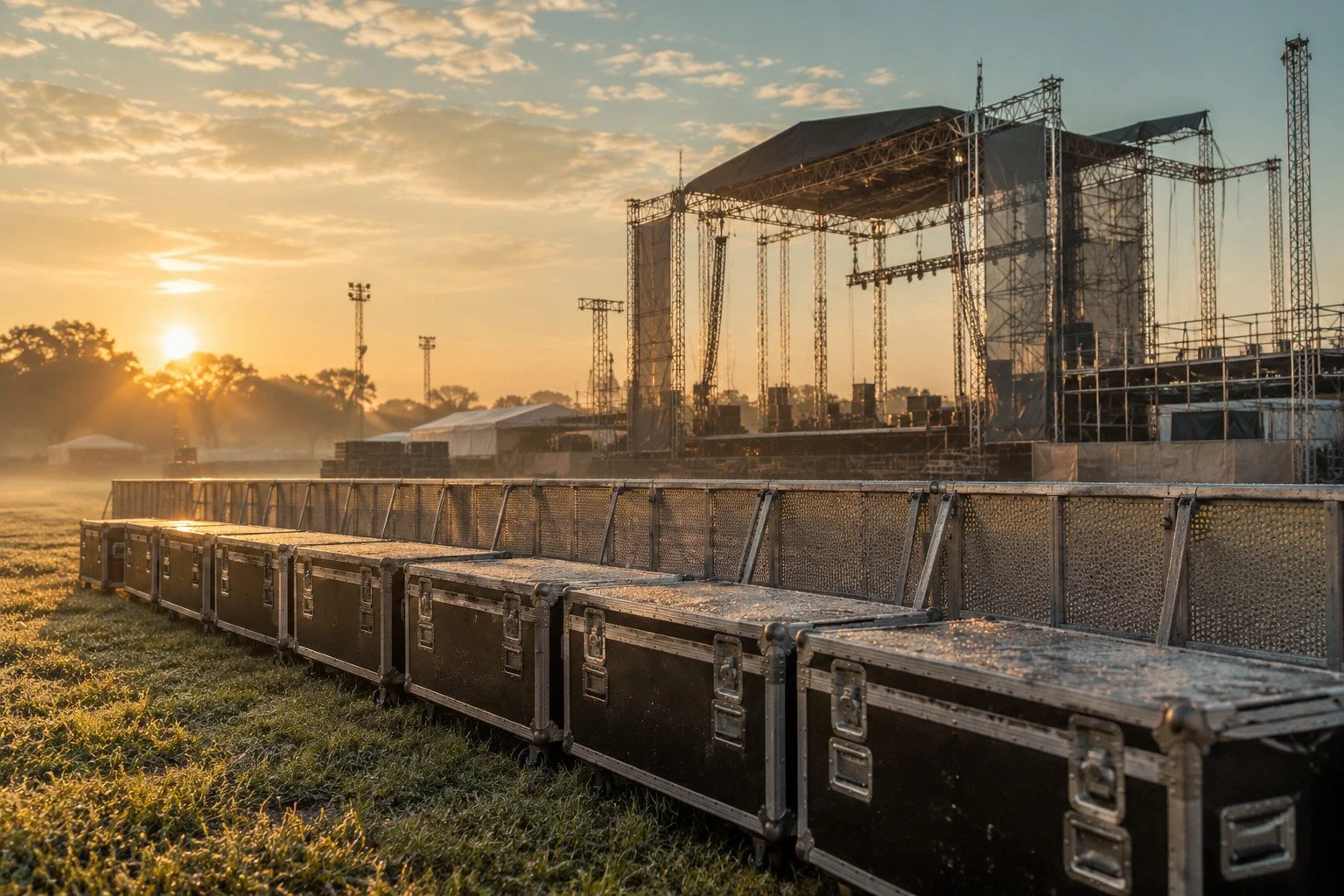
Image is AI generated
Festival Staffing · Team Building · Deep Agility
⏱ Reading time: 12 min.
You are eleven weeks out and you are three people short.
The site coordinator who ran your load-in the last four seasons took a job with benefits in March. Your best stage manager is booked through November on a tour that pays better than you can. And the production assistant you spent all of last season training just texted to say she is not coming back, and she was lovely about it, which somehow makes it worse.
So you open the spreadsheet from last year. You start calling. And somewhere around the fourth unanswered text you catch yourself thinking the thought every festival leader has had in September: maybe I just contract the whole thing out.
Look. Before you make that call, there is a better question underneath it.
Most of us walk into fall asking who we need to hire. That is the wrong question, and it is why the same three holes open up every single year.
"Stop asking who you need to hire for the season. Ask who you could not afford to lose if there were no season at all."
Because you already answered that question. You answered it in 2020, under pressure, with no revenue coming in and no idea when it would come back. And the answer you gave then is the most honest org chart your organization has ever produced.
The Shortage Is Not a Bad Year. It Is the New Floor.
Every fall, someone in our industry says it out loud like it is weather. Nobody wants to work anymore. It is not true, and believing it will cost you the season.
An Event Industry Council staffing outlook survey found that 89% of event professionals report staffing shortages have directly impacted their events. Not made things harder. Impacted the event. If nine out of ten of us are living the same problem, it is not a hiring failure. It is a structural condition, and structural conditions require design, not effort.
The people did not vanish. They reorganized. Skilled crew who left during the shutdown found work with predictable hours and health insurance, and a meaningful number of them decided they preferred it. The ones who stayed learned what their labor was worth on an open market. And the generation coming up behind them watched all of it happen in real time and drew conclusions.
Meanwhile the churn underneath us has not slowed down.
HR Dive reports annual churn among hourly event workers running at 63%. In an industry built on institutional knowledge, on the person who remembers which gate floods and which vendor needs a reminder call, losing two-thirds of that layer every year is not an HR statistic. It is an operational risk you carry into every load-in.
So no, you are not failing at recruiting. You are running a twentieth-century staffing model against a workforce that reorganized itself while we were all closed.
Three Workforces, and You Are Probably Running All of Them
Most festival organizations describe themselves as one thing and operate as another. It helps to name the three honestly.
The gig force. Hired by the shift or the show. Ticket scanners, load-in labor, day-of hands, the extra bodies you bring on for the weekend. High flexibility, low continuity. They will not know your site and they should not be anywhere near a safety-critical decision.
The seasonal force. Hired for the run. Contracts that start in spring and end at load-out. Your coordinators, your department seconds, your box office leads. This is the layer that holds the most knowledge relative to how little you pay to keep it, and it is the layer that walks out the door in October with everything it learned.
The core force. Year-round. On the books whether or not there is an event on the calendar. Small, expensive, and the reason your organization exists in January.
Here is the part most directors have never said out loud: you are not choosing between these. You are running a hybrid, and you are probably running it by accident.
Which means the real decision in front of you is not gig versus core. It is which functions sit inside the walls and which ones you buy.
Turnkey or Contracted Out? The Honest Ledger
A turnkey production team means you own the whole build. Your people, your gear decisions, your standards, your problem. Contracting out means you buy capability by the season and hold a vendor accountable instead of an employee.
Both work. Both fail. Here is the ledger without the sales pitch.
What turnkey buys you. Institutional memory that compounds. A team that knows your site, your artists, your board, and your weather. Faster decisions in a crisis, because nobody has to be briefed on who you are. And culture, which you cannot subcontract no matter how good the vendor is.
What turnkey costs you. Fixed overhead in a business with wildly variable revenue. Capability gaps you cannot fill fast when someone leaves in March. And a hard ceiling on specialized expertise, because you cannot afford to keep a rigging specialist employed for the eleven months you do not need one.
What contracting buys you. Expertise on demand. Costs that scale with the season instead of sitting on your books all winter. Liability that sits partly on someone else's certificate of insurance. And the ability to say yes to a bigger show than your standing team could physically produce.
What contracting costs you. Knowledge that leaves the building at load-out. A vendor whose loyalty is contractual, not cultural. Rising rates you do not control. And the thing nobody warns you about: every contracted function is a conversation you now have to manage instead of a decision you can simply make.
"Contracting out is not cheaper. It is differently expensive. You trade money for flexibility and you pay in coordination."
Now. The mistake I see most often is not that organizations contract too much. It is that they contract the wrong things.
Rigging, staging, audio, medical, fencing, waste, specialized security. Buy all of it. Those are capabilities, they are certifiable, they are measurable, and the market for them is genuinely better than anything you could build in-house.
But relationships are not capabilities. And the moment you outsource a relationship, you have handed someone else the thing that makes your festival yours.
The Core You Cannot Contract Out
So how do you know which functions are actually core?
You already ran the experiment. In 2020 there was no season, no gate, and no revenue, and every organization in this industry had to decide who stayed. Nobody made that list from theory. We made it from survival.
Look at who you held on to. That was never a payroll decision. That was your organization telling you what it actually is.
The Fall Bench
Seven functions to have locked before your season, no matter which model you run
These are not job titles. Titles change by the size of your organization. These are functions, and in a small shop one person may carry three of them.
- FinanceCash flow is the season. Settlement, payroll, vendor terms, and the forecast that tells you whether you can say yes. Contract the bookkeeping if you must. Never contract the person who knows what the money means.
- TicketingYour only real-time signal about whether this is working. On-sale strategy, pricing, scan data, and the customer relationship attached to every one of those records.
- Talent buying, booking, and advanceBuying is built on relationships and history. An agent returns a call because of who is asking, not because of the offer. Advance is where that deal meets your actual site. Riders, backline, hospitality, travel, arrival times, what your stage can physically hold. Somebody has to confirm you can do the show before you have already promised it to an audience. The least contractible function in the entire organization.
- MarketingVoice, audience, and the narrative your festival tells about itself all year. An agency can execute. Only someone inside can decide what is true.
- Public relationsThe relationships you need most on your worst day. If the first time a reporter hears from your organization is during a crisis, you built this function too late.
- SponsorshipMulti-year partnerships that live or die on trust. Sponsors renew with people. Turn this over and you will renegotiate every deal from zero, every year.
- Human resources and the admin hubThe connective tissue. Contracts, compliance, onboarding, and the institutional memory of how this organization actually works. The most quietly outsourced function on this list and the one that costs the most to lose.
Everything else can be seasonal, contracted, or bought. These seven are the bench.
Look at that list again and notice what is not on it. Not production. Not operations. Not site.
That is not because those functions matter less. It is because they are the most contractible high-skill work in our industry, and the market for them is excellent. What you keep in-house is the leadership of those functions, not the execution.
The Fall Bench Forecast
By 2030, the fully turnkey festival production team will be the exception rather than the standard. The organizations that thrive will not be the ones with the biggest staff. They will be the ones that got precise about which seven functions never leave the building, and built genuine partnerships around everything else.
Where the People Actually Are
Once you know which model you are staffing, the question of where to look mostly answers itself.
For core roles, hire from adjacent industries and stop apologizing for it. A hotel director of catering understands margin, volume, and service recovery better than most people we produce with. A convention services manager has run more simultaneous rooms than your site director. Touring production managers know load-in math cold. The skill transfers. The festival context does not, and that part you can teach.
For seasonal roles, look at last year's seasonal staff before you look anywhere else, and look earlier than you want to. Most of us reach out in June. By June they have already taken something else.
For gig roles, build the bench in the off-season instead of the week of. Agencies, staffing apps, university programs, community partnerships, alumni of your own crew. Then keep a list and actually maintain it.
And a word about who you are hiring, because this is where most fall staffing goes sideways.
Maybe you are a festival director. Maybe you are a producer, a site director, a talent buyer, a box office manager, a marketing lead, a sponsorship director, a venue operator, a catering and food-and-beverage manager, a convention services lead, a conference producer, a program director at a cultural institution, a tour manager, a volunteer coordinator fifteen seasons deep. I could go on and on. And maybe you are producing your very first festival this fall, staring at a staffing plan you have never built before, wondering whether anyone is going to notice you are figuring it out as you go.
Every one of you is hiring into the same market. And every one of you has the same advantage over a bigger organization, if you use it: you can offer something a paycheck cannot.
What Actually Keeps People in a Volatile Economy
You are probably not going to win on wage. Hospitality and service employers are competing for the same workers and they often pay better with steadier hours.
So compete where you can win.
Predictability. Publish the schedule earlier than feels comfortable. The single most valuable thing you can hand a seasonal worker is the ability to plan their life around your season.
A named path. Not vague talk about growth. Tell a returning coordinator exactly what next season looks like for them and what it takes to get there. People do not leave jobs. They leave ceilings they cannot see past.
A protocol for being told the truth. Install the upward-communication system before the season, not during it. If the first time your crew is asked what they are seeing is at the debrief, you paid for information you could have had in real time.
Being led by someone who is not falling apart. This is the one nobody puts in a job posting and it is the one that decides who comes back. People will absorb a hard season under a steady leader. They will not absorb an easy season under a chaotic one.
Now let me tell you who actually comes back.
Not the person chasing the rate. The person who loves this industry.
They keep up. Trending artists, old school, the nostalgia acts. They are the one in the huddle who says remember the year we, and they are right, and it changes the plan.
They come into the office because they want to see people. They ask about your kids. They know who graduated, whose birthday it was, where you went on your week off. They get genuinely excited thinking about the joy this show is going to hand an audience.
They take the course nobody told them to take.
And here is the one that tells me everything I need to know.
They don't count other people's money.
They trust that the people above them are thinking about them, even when the whole picture has not been explained to them yet. They assume there is something bigger going on and that they are somewhere inside it.
That is not loyalty I bought. That is loyalty I was trusted with. And you cannot contract for it, you cannot post it in a job listing, and you will not get it from anyone who does not believe the top of the house is thinking about them when they are not in the room.
Before you make another hire, check yourself
- Can you name which of your functions are core, seasonal, and gig right now, without opening a document?
- Have you looked at who you held during the shutdown and asked what that list was telling you?
- Of the seven core functions, which ones are currently sitting with a contractor or a vendor?
- Do your returning seasonal staff know what next season looks like for them, or are you hoping they wait?
- Is there a protocol for your crew to tell you what is going wrong while there is still time to fix it?
- If your most knowledgeable seasonal person did not come back next year, what would leave the building with them?
The Staffing Problem Is a Leadership Problem
Here is what I have learned across decades in this industry. The organizations that staff well are not the ones with the best recruiting. They are the ones that got clear about what they are.
When you know which functions are load-bearing, you stop hiring reactively. You stop treating every open role as an emergency. You stop contracting out relationships because a spreadsheet made it look cheaper. And you stop rebuilding the same three positions every fall.
Clarity about your core is not an org chart exercise. It is an identity question, and it is the same question underneath every hard call you make this season. Who are we, what do we actually do, and what would we still be if the season disappeared?
You answered that once, under the worst conditions any of us have worked in.
Go read your own answer. Then build the bench around it.
Festival Leadership Foundations
Lead From Depth, Not Just From Drive
Built for festival and live events professionals who want to know exactly who they lead from before the season decides for them. The next cohort is forming now.
Join the Waitlist →