
Five Guitarists and No Drummer: You're Missing a Team Player Style
Last week, a festival director told me something that broke my heart: "We have the most talented team in the industry. But by show week, half of them are in tears, and the other half have stopped talking to each other."
Sound familiar?
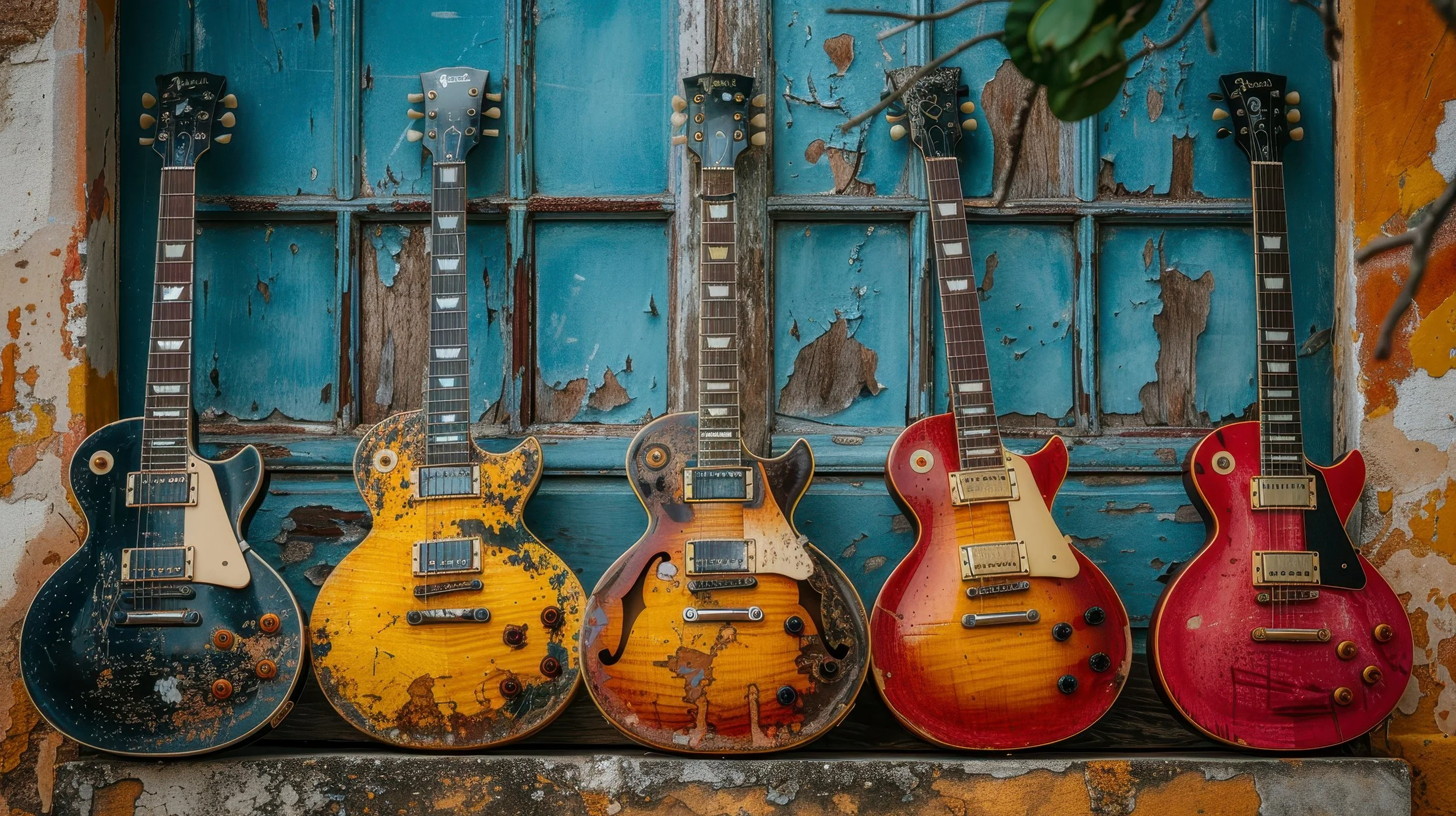
Here's what I've learned after three decades of producing large-scale festivals and teaching entertainment and festival management: Your team isn't failing because they're not talented enough. They're failing because you have five guitarists and no drummer.
And the music industry—sorry, the festival industry—keeps wondering why the band can't keep time.
The Composition Problem We're Not Talking About
We throw around words like "sustainability" and "retention crisis" as if the solution is better self-care apps and meditation breaks. But after researching the mental health crisis in our industry—74% experiencing poor mental health from their work, 80% burnout rate (highest of any sector except military service), and suicide risk 5-10 times higher than the general population—I've come to believe that most of what we call "exhaustion" is actually composition failure.
We're asking Collaborators to function as Contributors. We're forcing Communicators to act like Challengers. And we wonder why everyone's depleted by Sunday night.
Let me explain what I mean.
The Four Team Players Every Festival Needs
The Parker Team Player Survey—built on decades of organizational research by Glenn Parker—identifies four distinct styles that high-performing teams need:
Contributors are your data people. They bring technical expertise, attention to detail, and systematic thinking. They're the ones building your production schedules with precision, tracking your budgets down to the penny, and making sure every permit is filed correctly.
Collaborators keep everyone's eyes on the horizon. They maintain focus on the big picture, align people around shared vision, and ensure the festival's mission doesn't get lost in the weeds of vendor contracts and porta-potty counts.
Communicators build the bridges. They facilitate collaboration, ensure everyone's voice is heard, and turn a collection of departments into an actual team. They're reading the room during production meetings and checking in when tensions rise.
Challengers are your insurance policy against groupthink. They question assumptions, push for innovation, and have the courage to say "Wait—are we sure this is the safest approach?" when everyone else is nodding along.
Now here's the problem: Most festival teams have three of these styles and are completely missing the fourth.
And that missing style? It's the one that would have prevented your last crisis.
What Linda Hill Would Say About Team Composition
Linda Hill from Harvard Business School has spent decades studying how innovation actually happens in organizations. Her research led her to a powerful conclusion: Innovation doesn't come from lone genius leaders. It comes from orchestrating collective genius.
In her book Collective Genius, Hill argues that great leaders don't create solutions—they create the conditions where diverse teams can collaborate, experiment, and solve problems together. She'd look at festival production and say: "Stop trying to be the genius who solves everything. Start building a team where different types of genius can work together."
Her ABC Framework for Innovation identifies three leadership roles that must exist in any organization:
Architects design the systems and structures that enable collaboration (hello, Collaborators)
Bridgers break down silos and connect different perspectives (that's our Communicators)
Catalysts push for bold action and innovation (those are our Challengers)
Hill's critical insight for festivals: You need leaders who can move fluidly across all three roles. But most festival directors get stuck in one role—usually Architect (designing systems) or Catalyst (pushing for execution)—while neglecting the Bridger work that prevents department wars.
The Parker Team Player framework gives you a practical tool to identify who naturally fills which ABC role on your team and where you're dangerously under-resourced.
What Don Clifton Would Say About This
Don Clifton, founder of Gallup's CliftonStrengths work, built his entire philosophy on one revolutionary idea: Stop trying to fix people's weaknesses. Build teams where different strengths complement each other.
He'd look at our festival industry—where we promote the best Production Manager to Festival Director and then expect them to suddenly be great at marketing, fundraising, community relations, and visionary leadership—and he'd say: "Why are you asking your Achiever-Responsibility-Discipline leader to suddenly become a Woo-Communication-Maximizer leader? That's not development. That's punishment."
Clifton understood something we've forgotten: Excellence comes from doing MORE of what you're naturally great at, not from trying to become someone you're not.
The Parker Team Player framework works the same way. When you understand that your Head of Production is a natural Contributor (detail-oriented, systematic, task-focused) and your Marketing Director is a natural Communicator (relationship-focused, consensus-building), you stop being frustrated that they approach problems differently. You start orchestrating their complementary strengths.
But here's where it gets interesting: Clifton's research connects beautifully with recent work by thought leaders like Amy Edmondson, Linda Hill, Adam Grant, and Gustavo Razzetti.
What the Research Actually Shows
Amy Edmondson from Harvard Business School has spent decades researching psychological safety—the belief that you won't be punished for speaking up. Her 2024 research shows something critical for festivals: psychological safety is especially important for people whose voices are historically silenced.
Here's why this matters for team composition: Challengers can't function without psychological safety. If your team culture punishes people for questioning decisions, your Challengers go silent. And when they go silent, you lose the very people who could spot the safety issue, the budget overrun, or the vendor problem before it becomes a crisis.
What Adam Grant Warns Us About Team Player Styles
Adam Grant, organizational psychologist and Wharton professor, would want us to be careful here. In his work on organizational psychology and hidden potential, Grant emphasizes something crucial: having a growth mindset about both yourself AND your role matters more than innate talent.
He'd look at the Parker framework and say: "This is useful for self-awareness, but don't let it become an excuse."
Grant's research shows that the best team members demonstrate psychological flexibility—they can stretch beyond their natural style when the situation demands it. Your natural Communicator needs to be able to shift into Challenger mode when they see something unsafe. Your Contributor needs to zoom out and act like a Collaborator when the team is losing sight of the mission.
The danger Grant would warn against: typecasting. When someone takes the Parker survey and discovers they're a Contributor, they might unconsciously use that as permission to avoid challenging assumptions ("I'm not a Challenger, so I don't speak up"). Or a Collaborator might avoid detail work ("That's not my style").
Grant's insight: You're describing behavioral preferences, not fixed traits. The goal isn't to stay in your lane—it's to understand your lane so you know when you need to deliberately drive in a different one.
This connects to his work distinguishing between different types of team players—givers, takers, and matchers—which is about motivation, not style. You can be a Challenger who gives generously (pushing the team toward better solutions) or a Challenger who takes selfishly (criticizing to elevate yourself). Style and motivation are different dimensions.
Linda Hill, also at Harvard, introduced the ABC Framework for innovation: leaders must act as Architects (designing systems), Bridgers (connecting silos), and Catalysts (pushing for bold action). Look at those roles—they map almost perfectly to Collaborators, Communicators, and Challengers.
Adam Grant's research on organizational psychology emphasizes something crucial: having a growth mindset about both yourself and your role matters more than innate talent. The best team members can flex between different team player styles based on what the situation needs.
Gustavo Razzetti of Fearless Culture has documented how stress spreads through teams and causes them to fragment into hostile subgroups. His research shows that diverse teams handle stress better—when everyone's the same style, the team collapses under pressure. But when you have all four styles, stress gets distributed and teams stay resilient.
And Bruce Tuckman's classic team development stages (Forming-Storming-Norming-Performing) show us that different styles lead at different phases. During Storming, you need Challengers pushing boundaries. During Norming, Collaborators align everyone. During Performing, Contributors execute with precision.
How This Actually Works in Festival Production
Let me make this practical. Think about your festival production cycle:
Pre-production (6-12 months out): You need Collaborators keeping everyone focused on the festival vision and Contributors building detailed plans. If you only have Communicators and Challengers? You get great meetings where everyone feels heard, lots of innovative ideas, but nothing actually gets scheduled.
Load-in week: Contributors shine here—systematic execution of detailed plans. But you also need Challengers willing to say "This rigging setup isn't safe" even when you're behind schedule. Missing those Challengers? That's how accidents happen.
Show days: Communicators become critical. They're reading crowd energy, facilitating quick decisions across departments, maintaining morale when things get chaotic. A team of only Contributors during show days? Everyone's executing their individual tasks perfectly, but nobody's connecting the dots.
Crisis moments: (And let's be honest—every festival has them.) This is when you need rapid consultation between Contributors (who know the details), Challengers (who see what could go wrong), Collaborators (who maintain perspective), and Communicators (who keep everyone coordinated).
Post-event debrief: All four styles matter here. Contributors document what happened, Communicators ensure everyone's voice is heard, Challengers push for real change, and Collaborators tie it back to mission and values.
See the pattern? Different phases need different leadership.
The Connection to Your Strengths
If you've taken CliftonStrengths (and if you haven't, we need to talk), you can start seeing how your Top 5 influence your team player style:
Strong in Executing themes (Achiever, Responsibility, Discipline)? You probably lean Contributor.
Strong in Strategic Thinking themes (Strategic, Futuristic, Ideation)? Likely a Collaborator.
Strong in Relationship Building themes (Empathy, Harmony, Includer)? Natural Communicator.
Strong in Influencing themes (Command, Competition, Activator)? Often a Challenger.
My own Top 5—Belief, Learner, Strategic, Positivity, Responsibility—means I naturally operate as a Collaborator (Strategic, Belief keeping focus on mission) with Communicator tendencies (Positivity creating psychological safety). But my Responsibility can push me into Contributor mode when I see details that matter.
Knowing this helps me understand: I'm never going to be the natural Challenger who questions everything. So I need to intentionally hire people who are. And I need to create psychological safety so they'll actually use that gift.
What This Means for You
If you're reading this and thinking "Oh no, we have six Communicators and no Contributors"—that's actually good news. Because now you know why your meetings feel warm and inclusive but nothing gets implemented.
Or maybe you're realizing "We're all Contributors, and we're drowning in details but losing sight of why we're doing this." That's your Collaborator gap.
The festival industry's workforce crisis isn't just about long hours and high stakes. It's about people trying to be all four team player styles at once because their teams aren't composed for success.
Here's what changes when you get this right:
Stress distributes instead of concentrating on your stars
Crises get caught earlier because Challengers feel safe speaking up
Innovation happens because you have the right mix of dreamers and doers
People stop leaving the industry because they can work within their natural strengths
Succession planning gets easier because you're building bench strength for styles, not just roles
This is what I call festival leadership composition—the intentional design of teams that can handle the full production cycle without exhausting everyone.
Some Questions Worth Asking
Before your next event cycle starts, consider:
Which Parker Team Player style is completely missing from your core leadership team? What problems did that gap create last year?
Who are your Challengers? When's the last time they pushed back on a decision? (If the answer is "never," you don't have psychological safety.)
Which production phase consistently goes sideways? What team player style is missing during that phase?
When your team is under stress, which styles retreat? How could you support them differently?
If you lost your key person tomorrow, which team player style would leave with them? How exposed does that make you?
The Missing Piece: Deep Identity
Everything I just described about team composition—understanding your natural Parker Team Player style, recognizing your team's gaps, building psychological safety—that's all part of Deep Identity.
Deep Identity is knowing who you are when the radios fail, the artist is late, and weather threatens load-in. It's leading from your core strengths, not borrowed strategies that don't fit festival realities.
And it's just one depth of three.
The Three Depths Framework™
After 36 years producing New Orleans Jazz & Heritage Festival and researching our industry's workforce crisis (74% experiencing poor mental health, 80% burnout rate, 60%+ annual turnover), I've learned this:
The festival industry doesn't have a work ethic problem. We have a framework problem.
We're using leadership models designed for offices, not production environments. We're treating exhaustion like an individual failure instead of a systems design flaw. And we're asking people to lead from depletion instead of wholeness.
That's why I created Festival Leadership Foundations—a course built around the Three Depths Framework™:
Deep Identity
Who you are when everything goes sideways. Lead from your CliftonStrengths, understand your team player style, make identity-based decisions instead of reactive ones. This is where team composition work lives—building self-awareness so you can build better teams.
Deep Stillness
Contemplative practices designed for people who live in organized chaos. Build the internal capacity to stay centered when everything around you is spinning—not as self-care fluff, but as operational strategy. This is your insurance policy against amygdala hijack and fear-based decision making.
Deep Agility
Strategic responsiveness that doesn't sacrifice your values. Make real-time decisions, communicate under pressure, build sustainable operations that honor both excellence and human well-being. This is where psychological safety practices and cross-functional collaboration live.
Why This Matters Right Now
The festival and live events community is exhausted. Not from lack of information—we're drowning in frameworks and systems and best practices. What we're missing is:
Connection with people who actually understand this industry
Space to be vulnerable about what's not working
Permission to be different and build sustainable models that fit OUR reality
Honest conversation about what integration (not fake balance) actually looks like
Practical habits that move us from goal-oriented to actually achieving goals
This course was designed by a practitioner, not an academic. I understand your calendar—I know you have maybe 2-3 windows per year where you have actual learning capacity.
That's why Festival Leadership Foundations is 4 strategic modules designed to be completed in 3-4 weeks—timed to fit BETWEEN your production cycles, not during them.
What's Included in 🌟Festival Leadership Foundations🌟
Module 1: The Crisis & The Framework
Why traditional leadership training fails festival professionals. The Three Depths Framework™ as an integrated system. Your baseline assessment.
Module 2: Deep Identity - Leading From Your Strengths
CliftonStrengths for festival contexts. Identity-based decision making. Team composition insights (including Parker Team Player framework). Leading from who you ARE vs. who you think you should be.
Module 3: Deep Stillness - Leading From Centeredness
Contemplative practices for chaos workers. Your personal stillness protocol for before/during/after crisis moments. Building psychological safety from internal stability.
Module 4: Deep Agility - Leading Sustainable Operations
Adaptive leadership in chaos. Communication under pressure. Crisis management frameworks. Building systems that sustain people long-term. Your 90-day implementation plan.
You'll receive:
Complete Three Depths Framework™ training
Comprehensive Workbook (including team composition assessments)
CliftonStrengths Applications for festival contexts
Contemplative Practice Recordings
Crisis Response Templates
Lifetime Access
Founding Member Pricing: $297 (Regular: $397)
Launch: May 2026—timed around your actual industry calendar
Join the Founding Members Waitlist
When you join the waitlist now, you:
✅ Lock in $297 Founding Member pricing (save $100 off regular $397)
✅ Get first access when enrollment opens in May 2026
✅ Receive the "Festival Team Composition Quick Assessment" tool immediately
✅ Get monthly Festival Leadership Insights email while you wait
✅ Exclusive invitation to pre-course webinar on the Three Depths Framework™
This isn't just another leadership course to consume alone. This is the framework I wish someone had given me 36 years ago—before I learned these lessons the hard way.
Because your festival deserves a leader who makes it through the season intact.
And you deserve a framework that understands what that actually takes.
Join the Festival Leadership Foundations Waitlist →
Course launches May 2026 • Founding Member Rate: $297 (through March 30)