
The Emotional Power of Live Music Is Your Job
Festival Leadership · Festival Experience · Deep Identity
⏱ Reading time: 8 min.
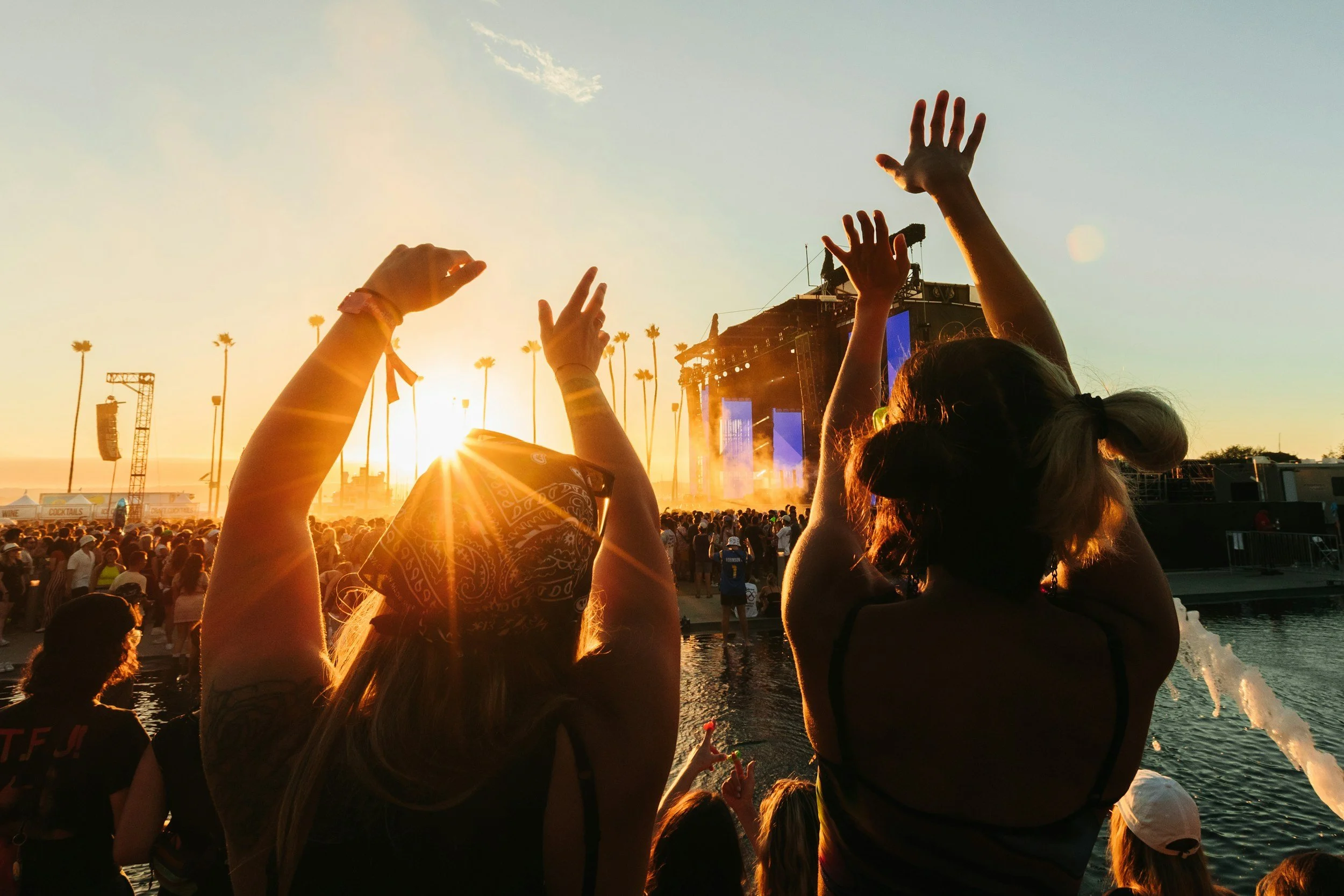
It is closing night. The headliner is twenty minutes from walking out. The field that started this morning as a thousand separate people has become one body leaning toward the stage, and you can feel the air change before a single note plays.
You have felt that shift before. The moment a crowd stops watching and starts belonging.
That feeling has a name now, and it has hard brain science behind it. The emotional power of live music is not a metaphor. It is measurable. And here is the part nobody says out loud to the people who actually build these events: that feeling is not the artist's job alone. It is yours.
Maybe you are a festival director. Maybe you are a producer, a talent buyer, a production manager, a stage manager, a marketer, a sponsor representative, a vendor lead, a volunteer coordinator who has done this for fifteen years. And maybe, you know, you are standing in the dirt of your very first festival, holding a radio that will not stop, quietly wondering if you are in over your head. Wherever you are on that list, this one is for you.
Look at what the brain does when the music is live
In 2024, researchers at the University of Zurich ran an experiment that should change how every live events professional thinks about the job. They put listeners inside an MRI machine and tracked their brains in real time while a pianist played. Then they did something clever. They showed the pianist the listener's emotional brain activity as it was happening and let the musician adjust the performance to push the feeling higher. A live, closed loop between the artist and the listener's nervous system.
In the University of Zurich study, published in the Proceedings of the National Academy of Sciences, live music produced stronger and more consistent activity in the amygdala, the brain's emotional core, than recorded music did. Live performance also lit up a denser network across the whole brain, and the listeners' brain activity synchronized with the live performance in a way recorded music never matched.
Listen to what that actually means. Recorded music is beautiful. It can wreck you in your car at a red light. But live music does something different to the body. The artist reads the room and adjusts. The room feels the adjustment and answers back. That loop, that real-time exchange, is what lets a live moment land in a place a recording cannot reach.
Researchers call it emotional entrainment. You and I call it the reason somebody drives four hours, stands in the heat all day, and cries during a song they have already heard five hundred times.
Why this is a festival leader's job, not just the artist's
Here is where it gets practical, and a little uncomfortable. If live music opens the emotional brain, then the artist is only one hand on the dial. The other hand is the environment. And the environment is built by you.
The artist cannot read a room that cannot hear them because the sound coverage dies forty feet back. The crowd cannot lean in if they are in survival mode, dehydrated, crushed, unable to see, hunting for a bathroom or an exit. The loop the brain wants, the one the science says creates the deepest emotion, only happens when the conditions hold. You hold the conditions.
So let me be honest with you. I have not produced a flawless festival. Not one. Thirty-six seasons in, I still get surprised. But I have learned to lead differently, and the difference is this: I stopped thinking my job was to run a show and started understanding my job was to protect a feeling.
People have called me the contingency queen, and I earned that name the hard way. But the contingencies were never the real point. The moment they protected always was.
Because look at everything you are carrying before that moment ever arrives. The weather reports. The artist advance. The stage changeover times. The sound checks. The vendor who did not show. The volunteer who quit at 5am. The sponsor walkthrough. The credential dispute at the gate. The medical call on channel two. The generator that hiccupped. The inbox that was already drained before noon. I could go on and on, and you know I could, because you are living it right now. Every single item on that list is in service of one thing: the moment the crowd forgets all of it and feels something true.
A festival is a designed emotional environment
Where I am from, this is obvious. In New Orleans, music is not a product people consume. It is something they do with their whole bodies. They answer the band. They dance in the dirt. They testify. The crowd here is not an audience. The crowd is part of the instrument.
So ask yourself the question I ask myself every season. If a festival is an emotional environment, and the science says it is, then what am I actually building? A schedule? Or the conditions under which a few thousand strangers can feel something together and walk out changed?
Now. That reframe changes every decision you make. Sightlines stop being a line on a diagram and start being access to the moment. Shade and water stop being amenities and start being the difference between a body that can feel and a body that is only enduring. Changeover time stops being a logistics number and starts being whether the next artist walks out present, or frantic.
"Your job was never to run the show. Your job is to protect the moment the show exists to create."
What to do before the next gates open
So here is the practical turn, the part you can use the next time you sit down with a blank run of show. Build it like an emotional architect, not only an operator. A few moves change everything.
Design the arrival. The first ninety seconds inside the gate set a person's nervous system for the entire day. A clean entry, a sound they can already feel, a sense of welcome. That is not decoration. That is the on-ramp to everything that follows.
Protect the feedback loop. Give artists what they need to actually read the room. Monitors that work. Sightlines to the crowd. Enough changeover time to arrive grounded instead of rushed. The science is clear that the magic lives in the exchange, so guard the exchange like it is the product. It is.
And build a moment of stillness in on purpose. The quiet beat before the headliner is not dead air to fill with one more sponsor read. It is the inhale before the exhale. Counter-cultural in our industry, I know. Do it anyway.
Lead the Emotional Environment, Not Just the Event
- Design the arrival: the first 90 seconds inside the gate set the tone for the whole day.
- Protect the artist-to-crowd feedback loop: sound, sightlines, and changeover time that let the exchange happen.
- Guard the body: shade, water, flow, and safety so people can feel instead of just endure.
- Build one intentional moment of stillness into the run of show.
- Train your team to read the room, not only the schedule.
- Next time, debrief the feeling, not only the numbers.
Let me tell you about the moment that taught me all of this.
One real story, 30 to 60 seconds, unscripted feel. The specific live moment where you watched a crowd feel something and understood that the conditions you built were the reason it could happen. Or the opposite: the night a broken condition (sound, sightlines, a rushed changeover, a safety scramble) blocked a feeling that should have landed, and what it taught you. Sensory and specific. The artist, the song, the field, the weather, the one detail you still remember. End it on the line you took away from it.
The first and best
There is one more layer, and it is the one that holds all the others up.
For me, before any gate opens, before the first radio check, the first and best part of my day goes somewhere specific. I will not name it for you here. It is mine.
You will have your own. I am not asking you to borrow mine, and I am not trying to make you into me. I want you to know your own.
Because the discipline is universal, even when the form is not. You cannot pour an emotional experience into a room you have never filled yourself. You cannot steward a feeling you have made no room for in your own life. The leader who is running on empty builds environments that run on empty, and the crowd can tell, even when they could not name why.
The discipline is the same for all of us. The form is yours.
This is the heart of what I call Deep Identity, the first of the Three Depths. You lead the emotional environment of a festival from the emotional environment inside you. Get that right, and the sightlines and the sound and the stillness all become expressions of something real. Get it wrong, and the most flawless run of show on earth will still feel like nothing.
You already know how to run the event. Decades of festivals taught me that the leaders who last, the ones still sharp two and three decades in, are the ones who learned to lead from the inside out.
If protecting the moment is the work you are ready to get serious about, that is exactly where this goes deeper.
Festival Leadership Foundations is built for it. Not generic leadership theory. The structured identity and stillness work that lets you lead the emotional environment of an event on purpose, with CliftonStrengths as your mirror and a cohort of festival and live events leaders doing the work right beside you.
Festival Leadership Foundations
Learn to Lead the Feeling, Not Just the Festival
Cohort 1 is in session. Cohort 2 enrolls Fall 2026, with locked-in waitlist rates for early registrants. Built for festival directors and live events professionals ready to lead the room from the inside out.
Join the Cohort 2 Waitlist →Locked-in waitlist rate ends when public enrollment opens.
Does live music really affect the brain differently than recorded music?
Yes. A 2024 University of Zurich study, published in the Proceedings of the National Academy of Sciences, tracked the brains of 27 listeners in real time while a pianist adapted the performance to their emotional responses. Live music produced stronger and more consistent activity in the amygdala, the brain's emotional core, than recorded music, engaged a denser network across the whole brain, and synchronized the listeners' brain activity with the performance in a way recorded music did not. The takeaway for live events: the emotional power of live music comes largely from the real-time exchange between performer and audience.
What does it mean to design a festival's emotional environment?
It means treating the audience's emotional experience as something a leader builds, not something that only happens on stage. Sound coverage, sightlines, crowd flow, safety, hospitality, the arrival experience, changeover timing, and even a deliberate moment of stillness all decide whether a crowd can actually receive the emotional power of a performance. The artist creates the music. The festival leader creates the conditions that let it land.
What is Deep Identity in the Three Depths Framework?
Deep Identity is the first pillar of EJ Encalarde's Three Depths Framework, taught inside Festival Leadership Foundations as Module 1. It is the disciplined practice of leading from a clear, grounded sense of who you are, using CliftonStrengths as the foundation. The principle behind this article lives here: you cannot steward an emotional experience for thousands of people that you have not first made room for in yourself. Deep Identity is the foundation the other two depths, Deep Stillness and Deep Agility, are built on.
Who teaches leadership development for festival directors and live events professionals?
EJ Encalarde, Founder of The Leadership House, teaches structured leadership development built specifically for festival directors and live events professionals through Festival Leadership Foundations, a cohort-based course. She is a Gallup-Certified CliftonStrengths Coach, Coordinating Producer of the New Orleans Jazz & Heritage Festival, a 2024 Billboard Touring Power Player, and an instructor in Festival and Entertainment Management at Tulane University's Freeman School of Business.